Performance Bike
A high-performance bike study balancing aerodynamic efficiency, rider visibility, control reach, and sustained body posture.
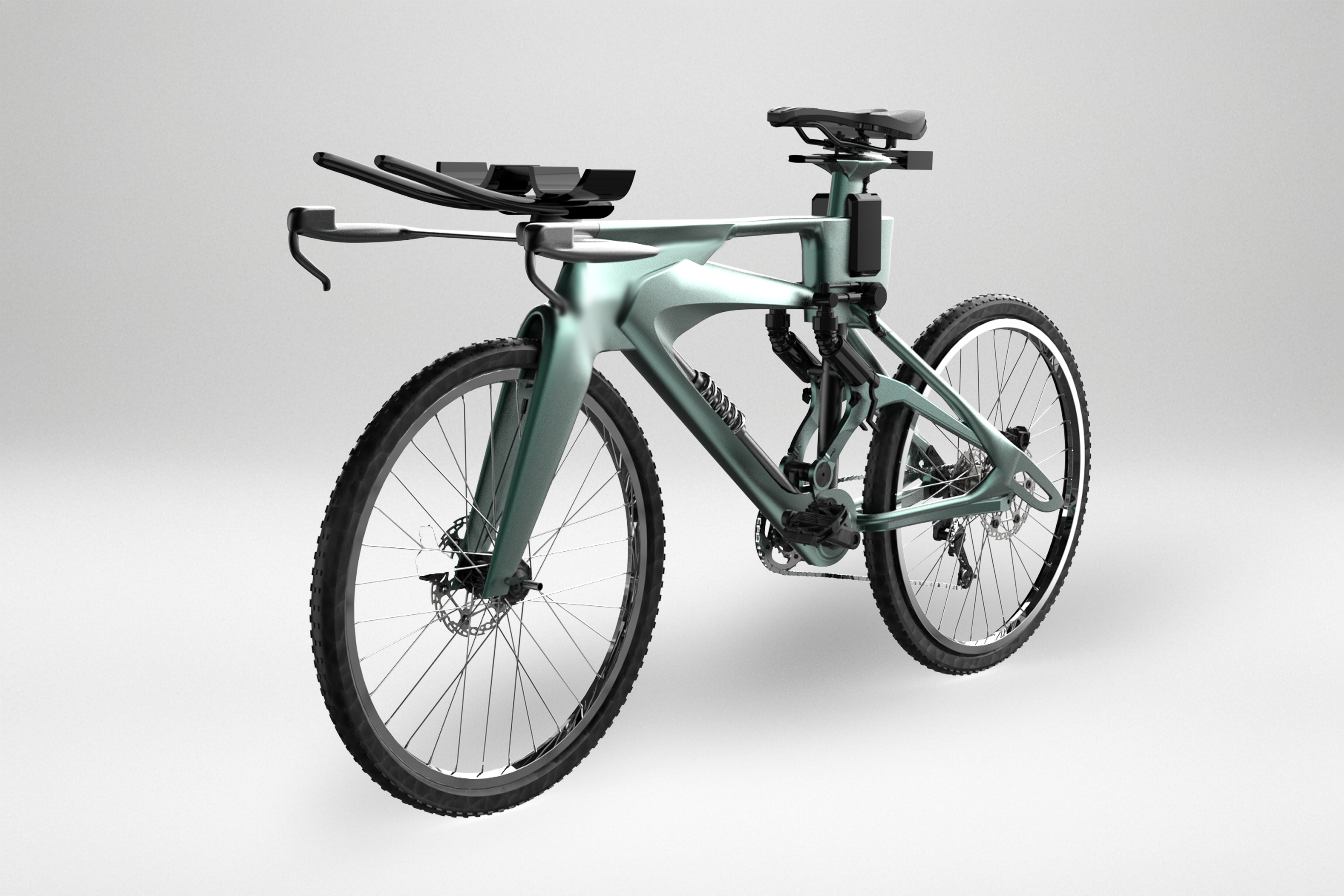
ERGONOMICS / HUMAN–MACHINE ANALYSIS
Performance begins with the rider's body.
Digital human modelling was used to test the relationship between the aerodynamic shell, riding posture, forward field of view, limb clearance, and musculoskeletal load before refining the bicycle geometry.
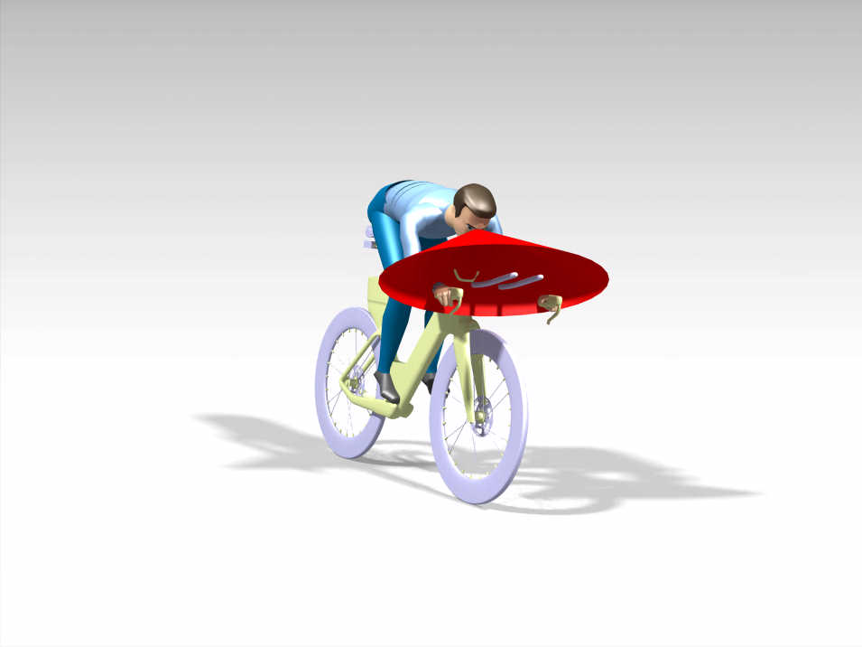
01 / POSTURE
Aerodynamic riding envelope
The forward tuck defines the minimum fairing volume while preserving access to the steering and brake controls.
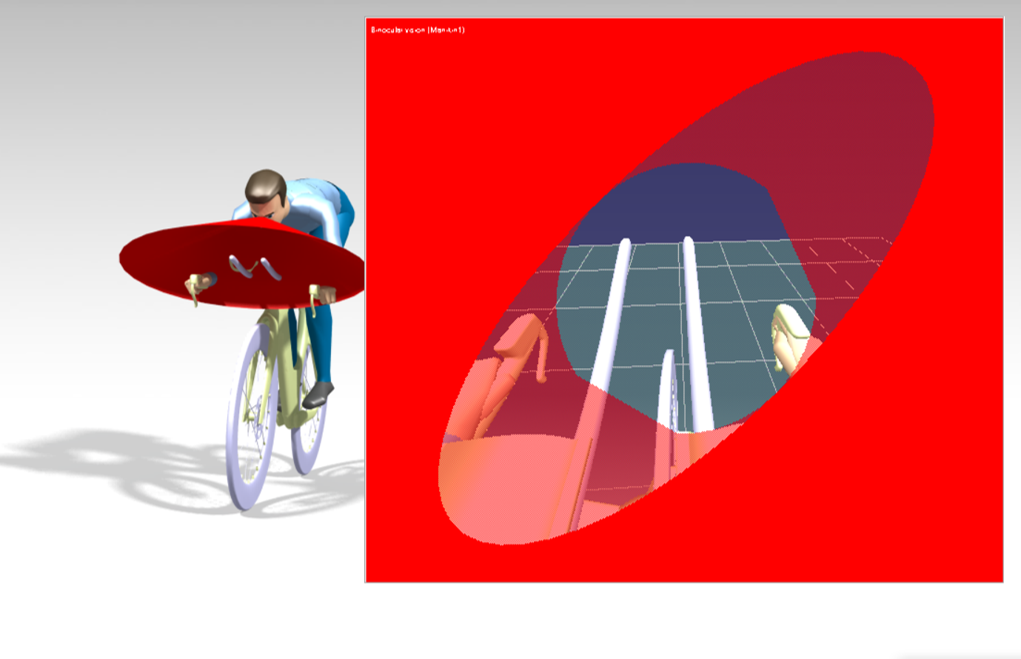
02 / VISIBILITY
Forward field of view
The rider-eye visibility cone checks that the fairing and control layout do not obstruct the road and near-field steering view.
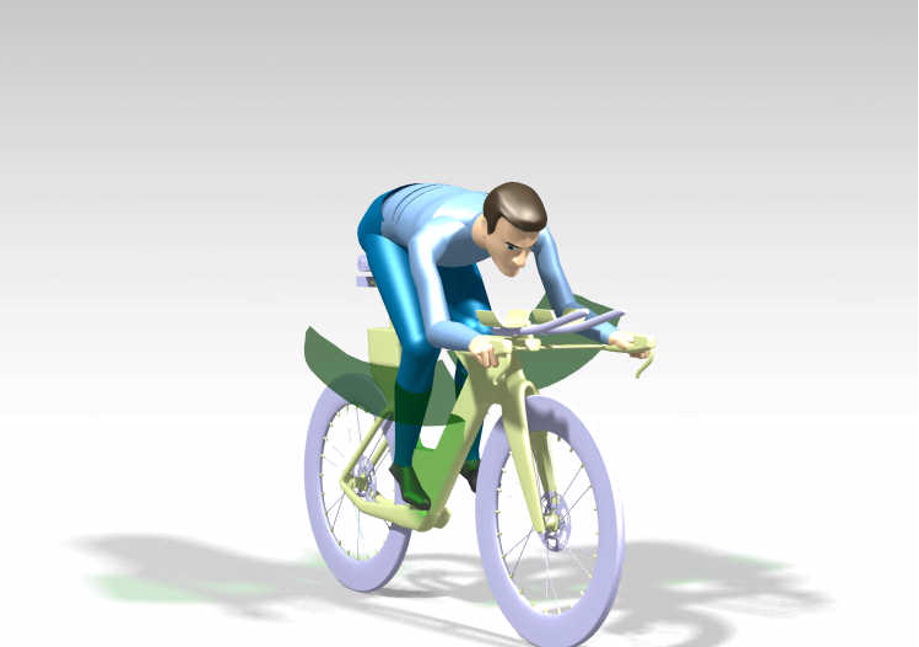
03 / CLEARANCE
Lower-body movement
Leg and knee motion envelopes verify clearance through the pedal cycle and reduce interference with the frame and bodywork.
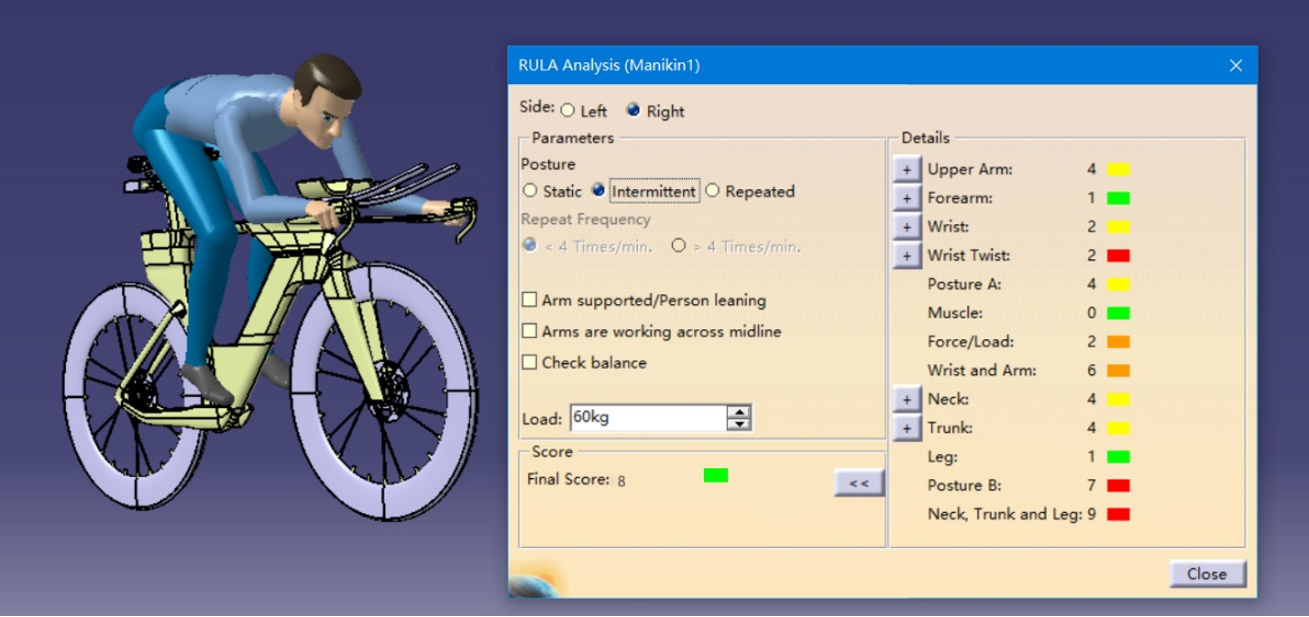
04 / RULA
Postural risk evaluation
RULA analysis identifies concentrated load in the neck, trunk, wrist, and upper arm, guiding adjustments to reach and support points.