Fluxion
Designed for the scale and density of megacities, Fluxion reimagines urban mobility, no longer viewing it as the product of a simple combination of modern technologies—an engine and wheels—but as a continuous system of movement. Personal autonomous cabins pair with shared chassis for city travel, then connect with rail networks for longer journeys—reducing congestion while preserving a personal travel experience.
System Map
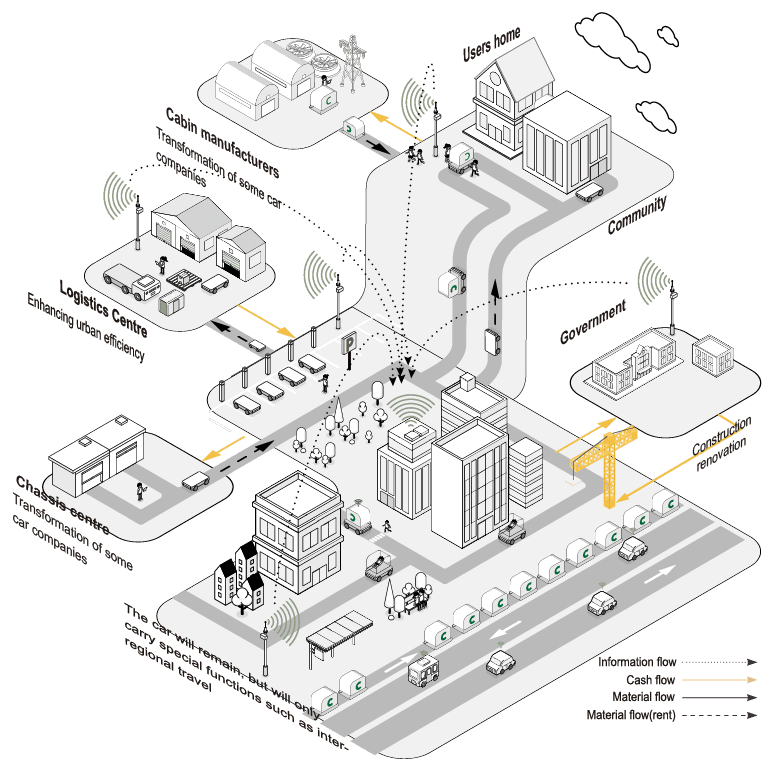
The system map shows Fluxion as a circular mobility service rather than a standalone vehicle. Users reserve a personal cabin from home; shared chassis collect it at neighborhood hubs and carry it through city streets or connect it to longer-distance transport. Cabin manufacturers, chassis centers, government and construction partners support the network through production, maintenance, energy and urban infrastructure. The four line types trace information, payment, physical movement and rental circulation, revealing how every actor coordinates to keep vehicles moving while reducing private-car ownership and road congestion.
System Scenario
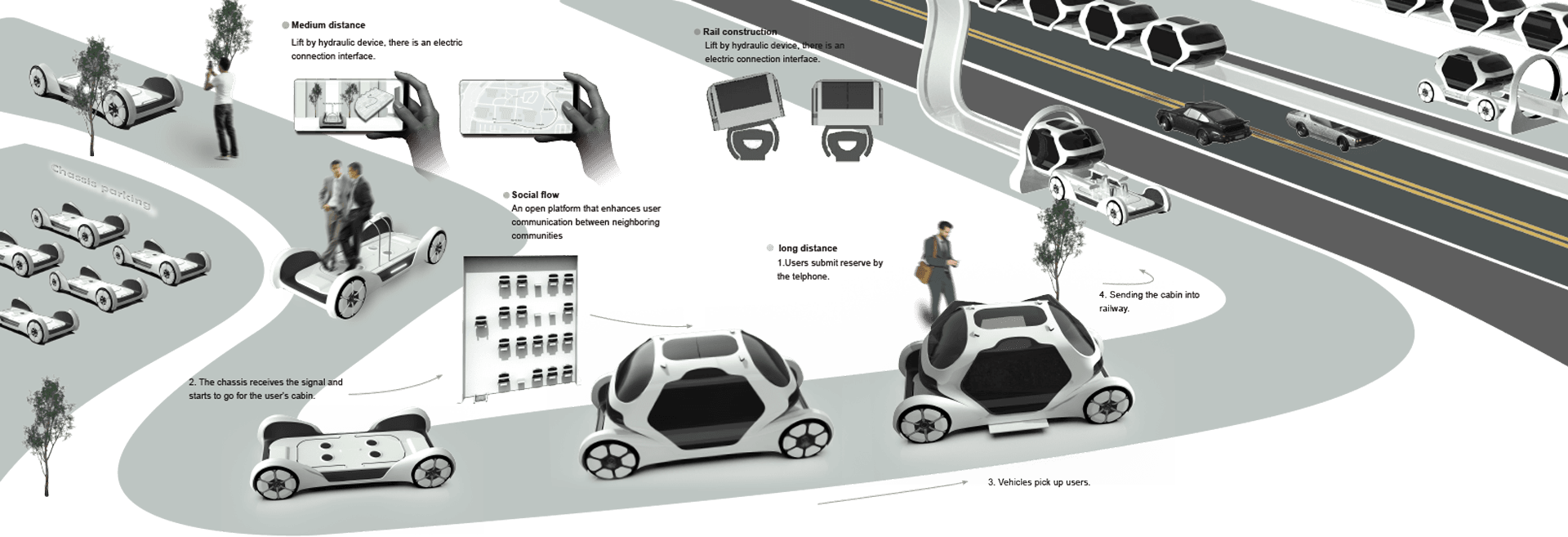
This scenario shows how the vehicle operates within a community, supports long-distance commuting, and transitions between the two modes. The cabin is primarily privately owned, while rental cabins remain available as a secondary option; the chassis and transport infrastructure are shared across the network.
01
Plan
Users set a destination from their private cabin, or rent a cabin when needed.
02
Dispatch
A shared chassis travels to the cabin and docks with it.
03
Connect
The chassis carries the cabin through the community and city road network.
04
Transfer
For longer journeys, the cabin transfers from the road chassis to the railway layer.
05
Release
After the trip, the private cabin stays with its owner while the shared chassis returns to circulation.
Urban Mobility Hierarchy
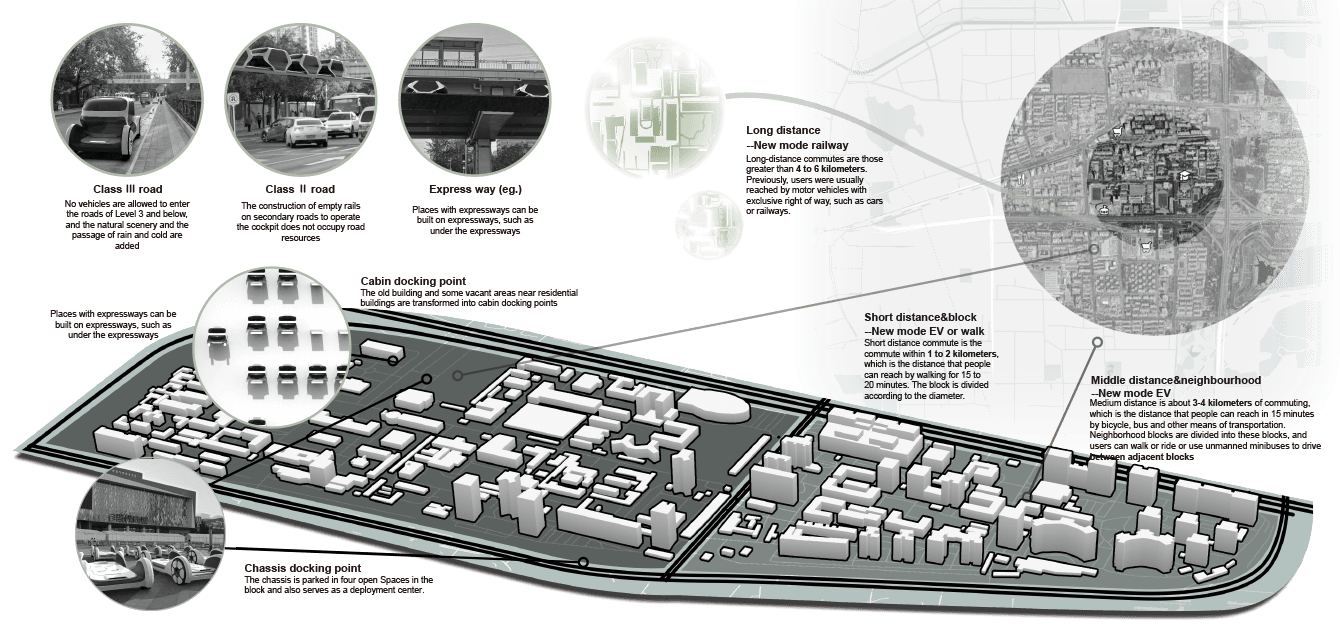
Using a site in Beijing as an example, this diagram defines a hierarchy of mobility scales through block-level restrictions, docking points, railway corridors and autonomous chassis circulation. It shows how the system is used at each level while redesigning how private mobility, public infrastructure and urban space exchange capacity.
Vehicle Design Details
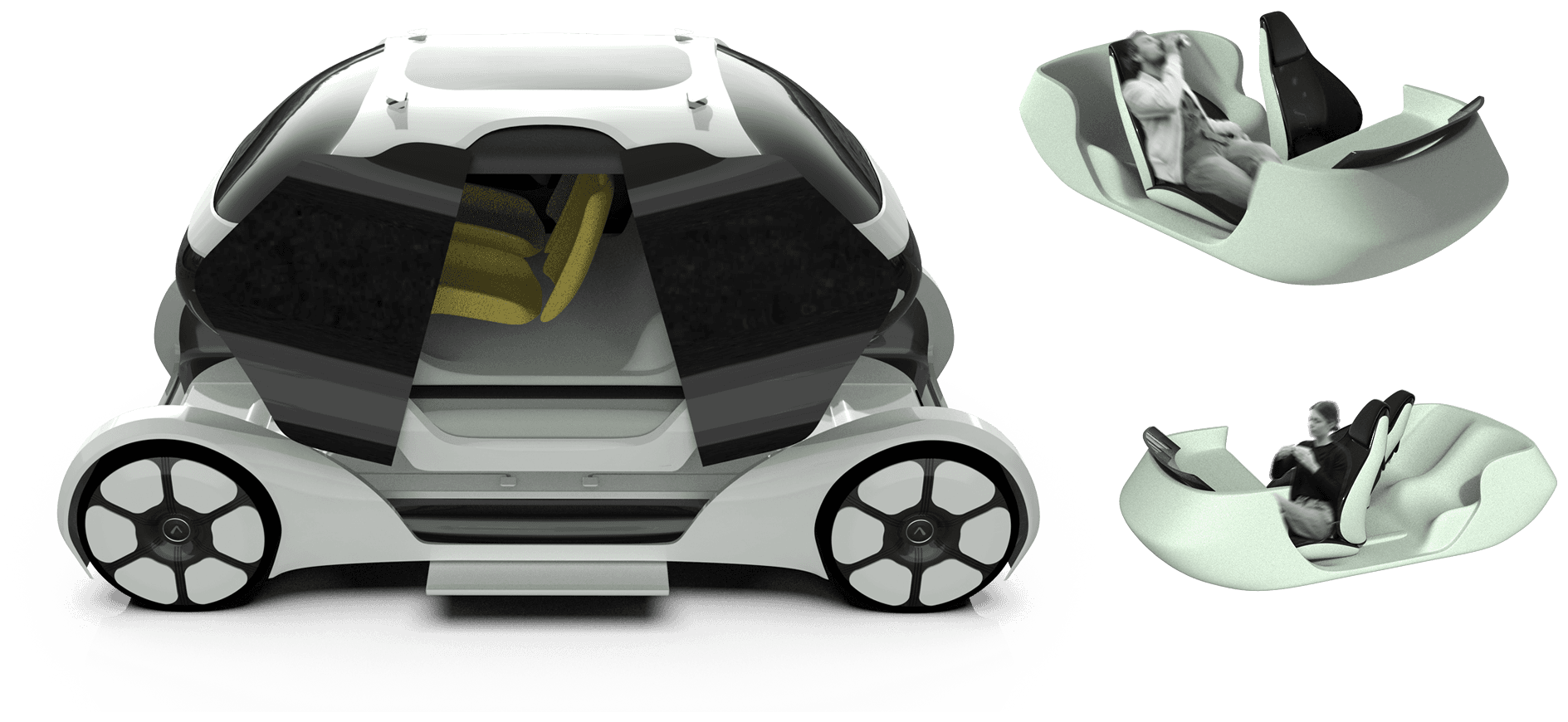
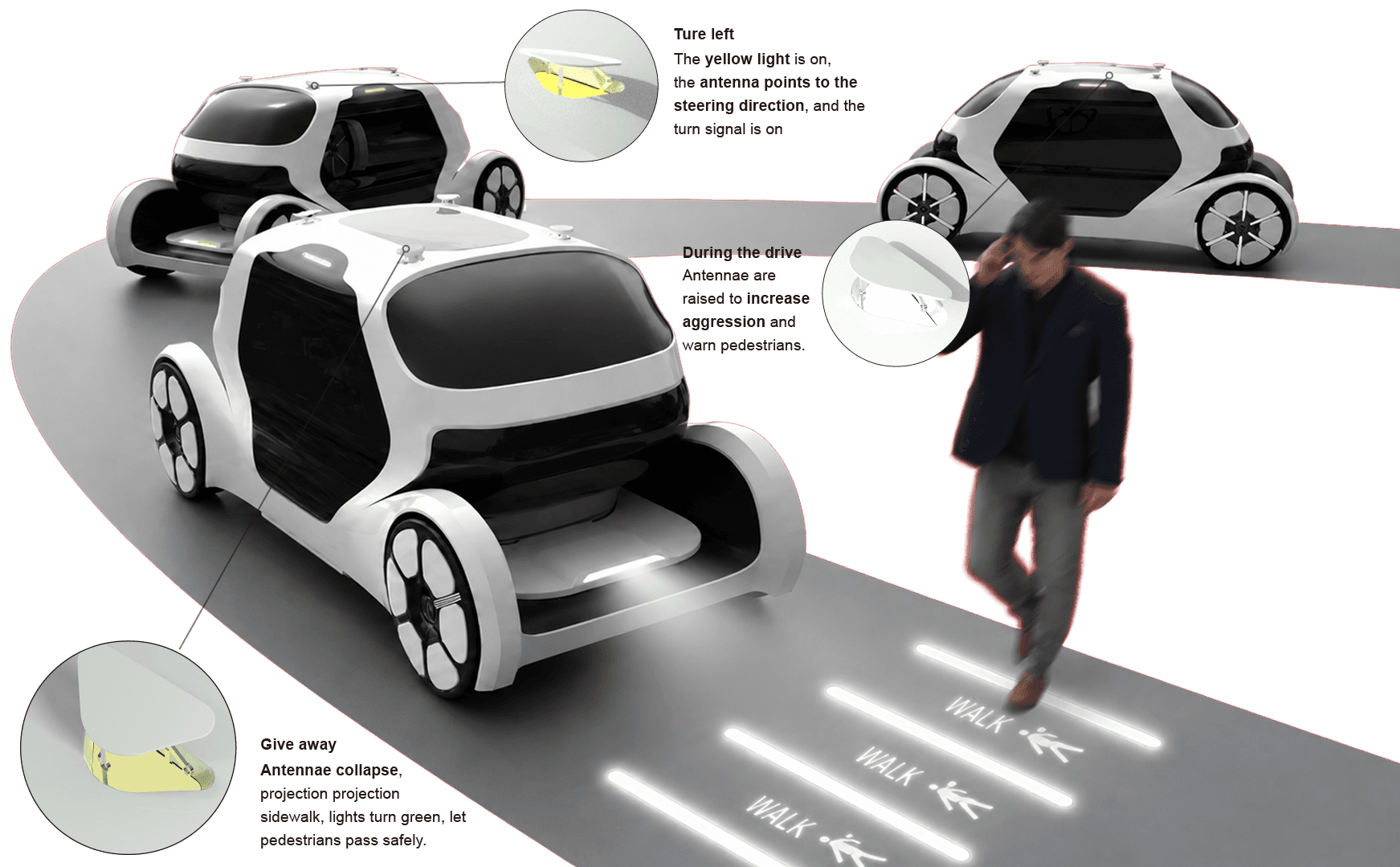
The privately owned cabin acts as a personal interior module that docks with shared chassis. Its exterior lighting, antenna gestures and low-speed chassis behavior communicate direction and operating status to pedestrians, making autonomous movement clearer and less aggressive in shared city space.