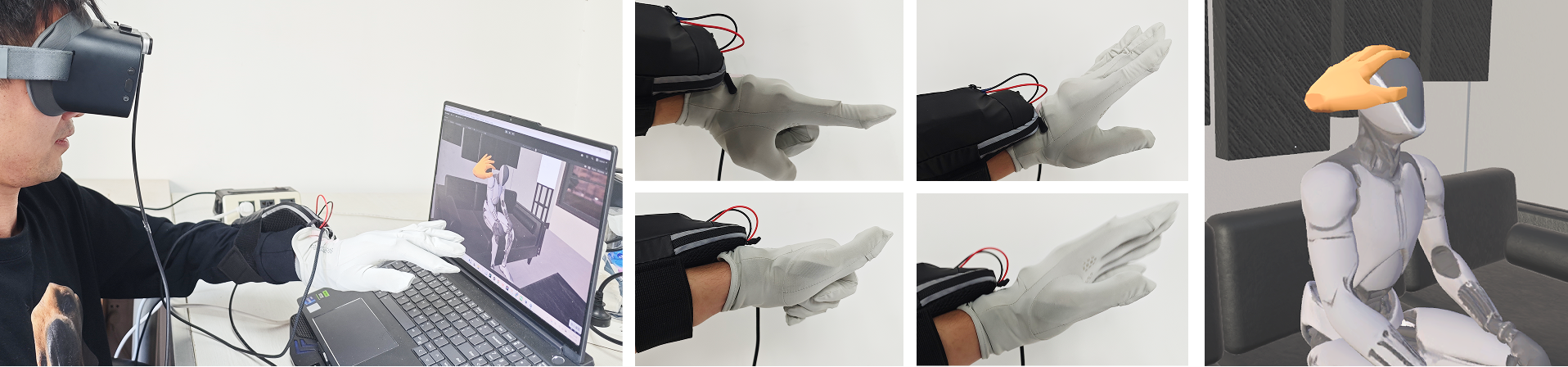
Flexible Wearable Haptic Device
A fingertip-scale wearable haptic glove that uses flexible PVDF bending actuators to study how identical tactile pulses can carry different social meanings in human-robot interaction.
Research paper by Xiaotian Sun, Zhantian Liang, Sitong Lu, and Jian Jiao.
Problem
Wearable haptics usually prioritise functional cues, leaving the social meaning of touch underexplored.
Device
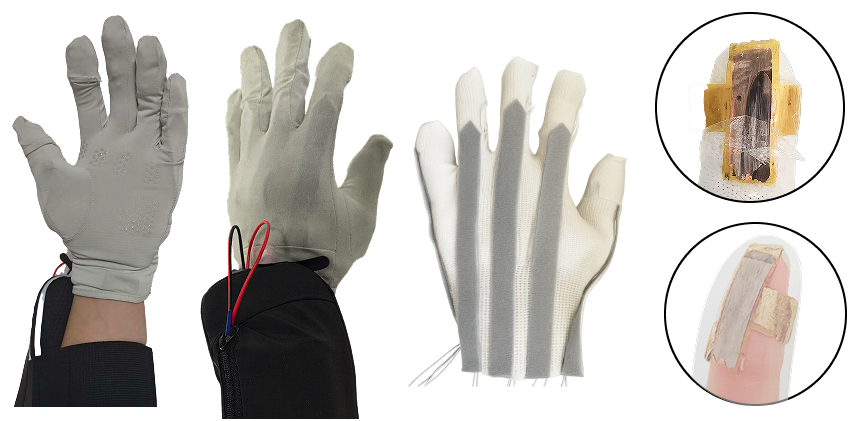
Cross-shaped, double-end-fixed actuators deliver multi-point fingertip feedback.
Finding
96.8%
recognition accuracy
Trust scores increased with the glove
System Logic
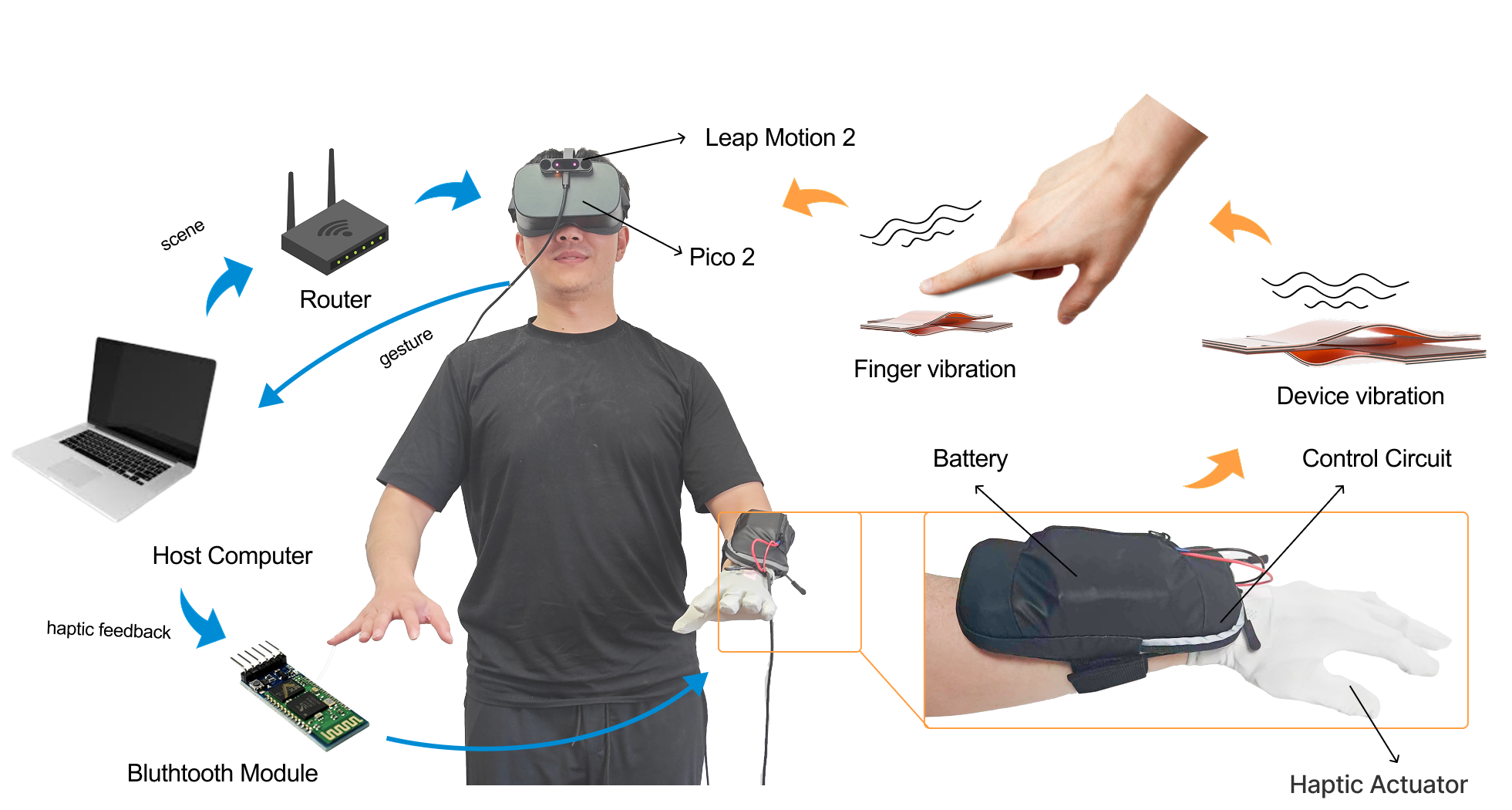
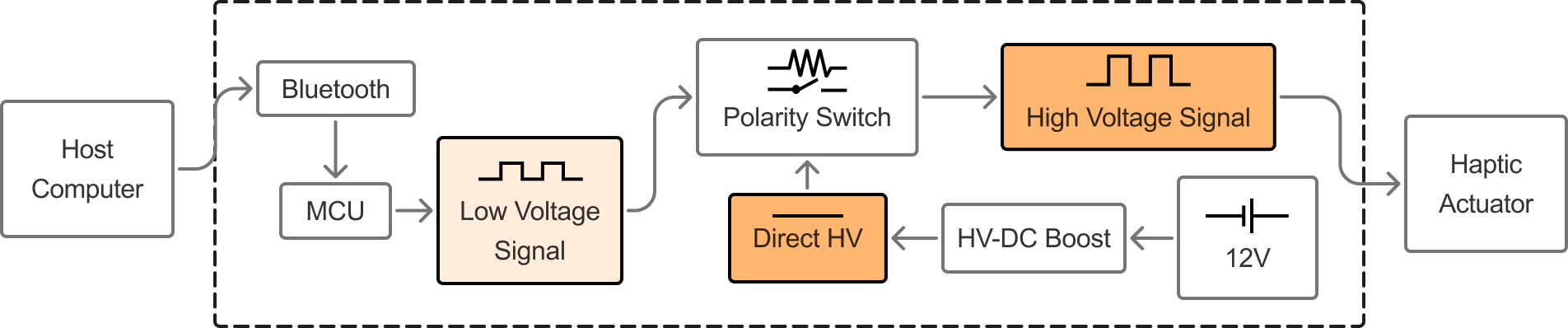
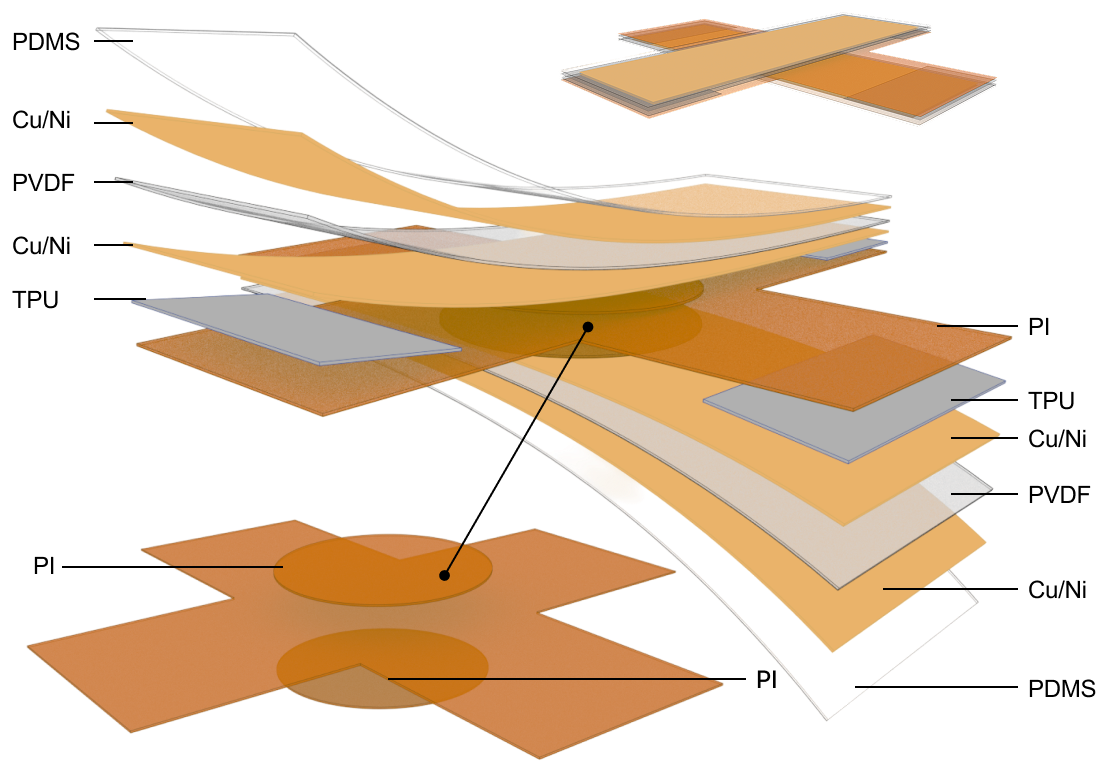
Layer Structure
Glove Structure
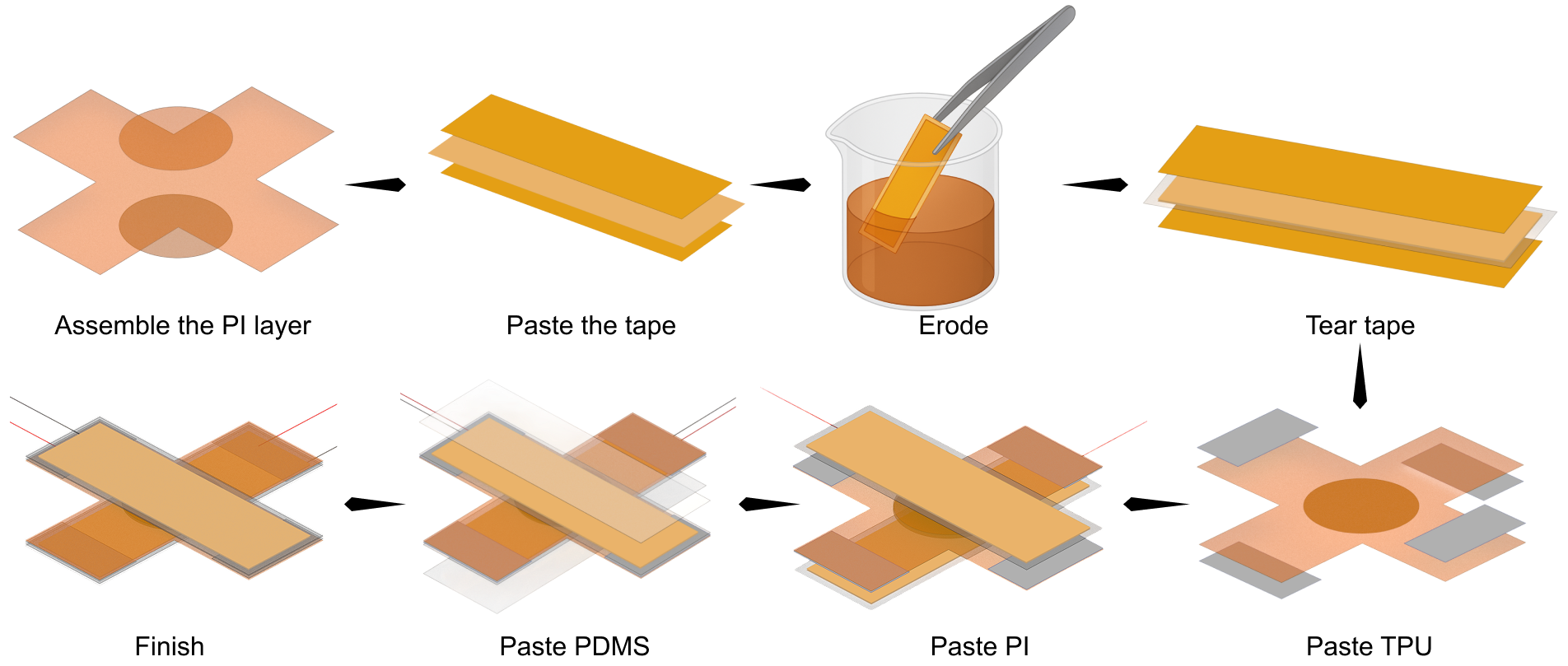
Fabrication Process
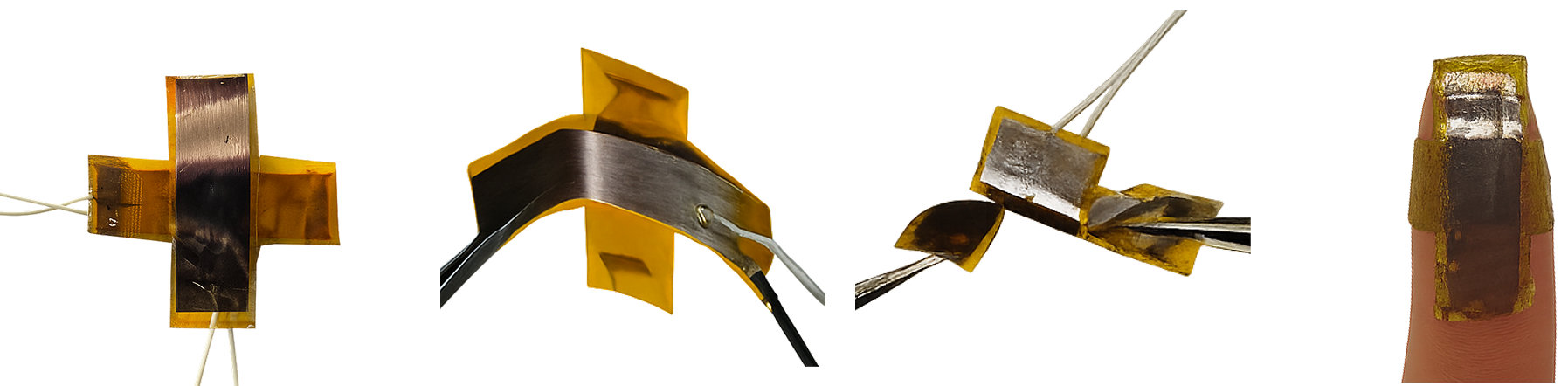
Flexible Actuator Design
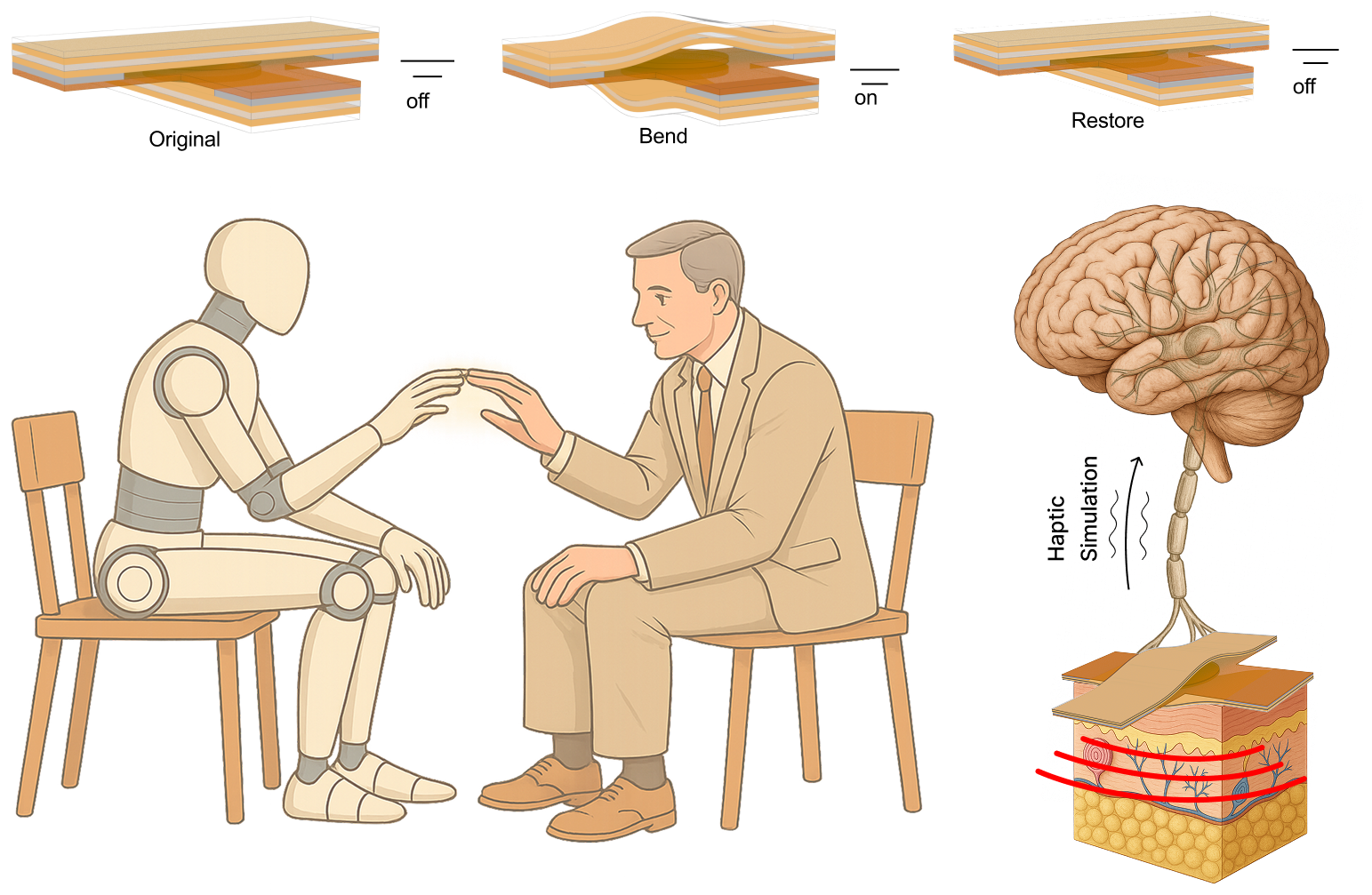
The actuator converts in-plane strain into out-of-plane bending, producing controllable vibration output for direct-contact wearable use. A central PI reinforcement layer improves symmetry, stability and comfort, while the PDMS layer protects the user from electrical exposure.
Actuator Logic
Electromechanical Characterization
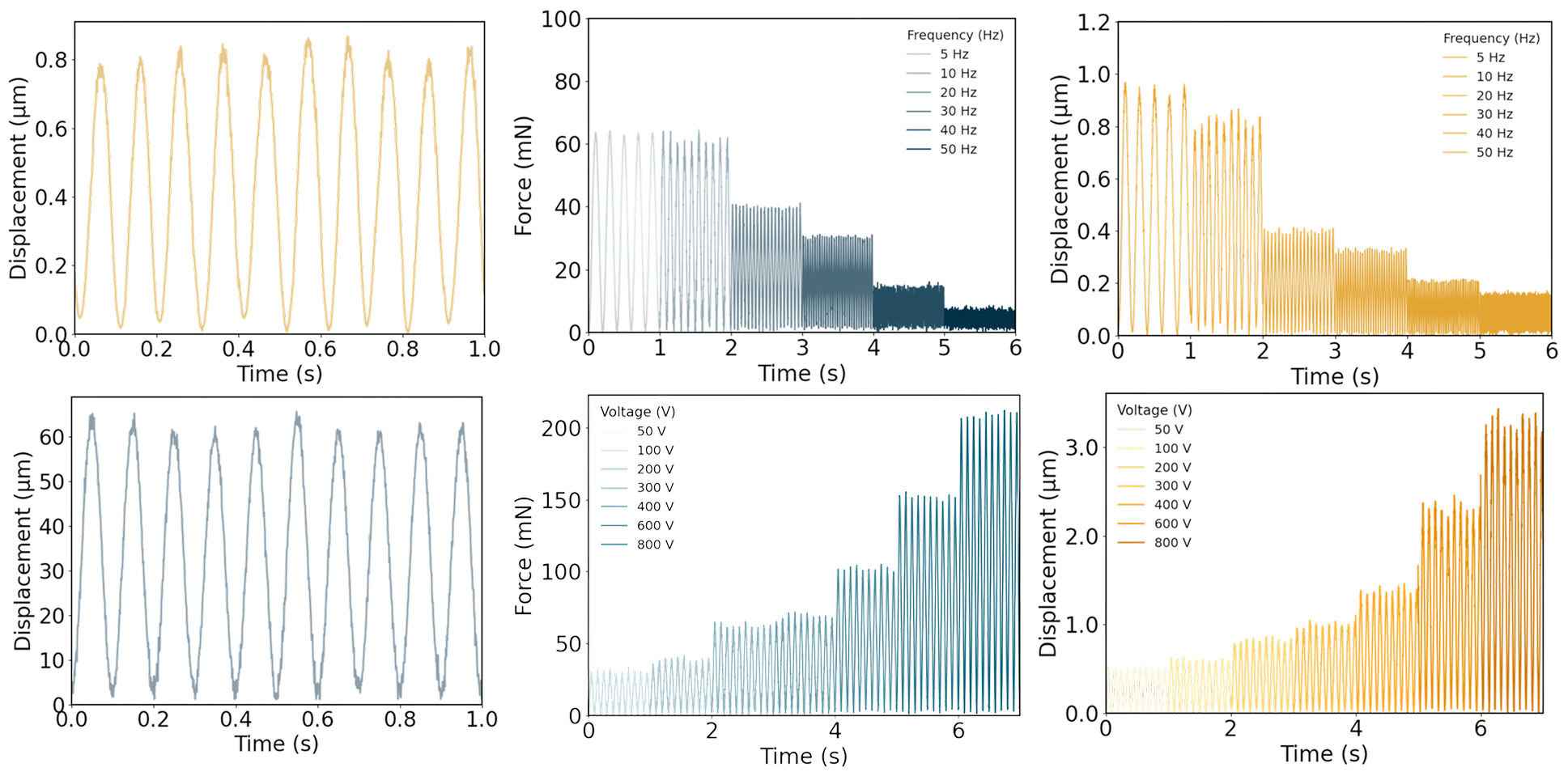
The actuator was tested across 50-800 V and 5-50 Hz. The measured displacement and force responses show stable, repeatable vibration output, making the device suitable for controlled tactile experiments.
Embodied HRI Scenario
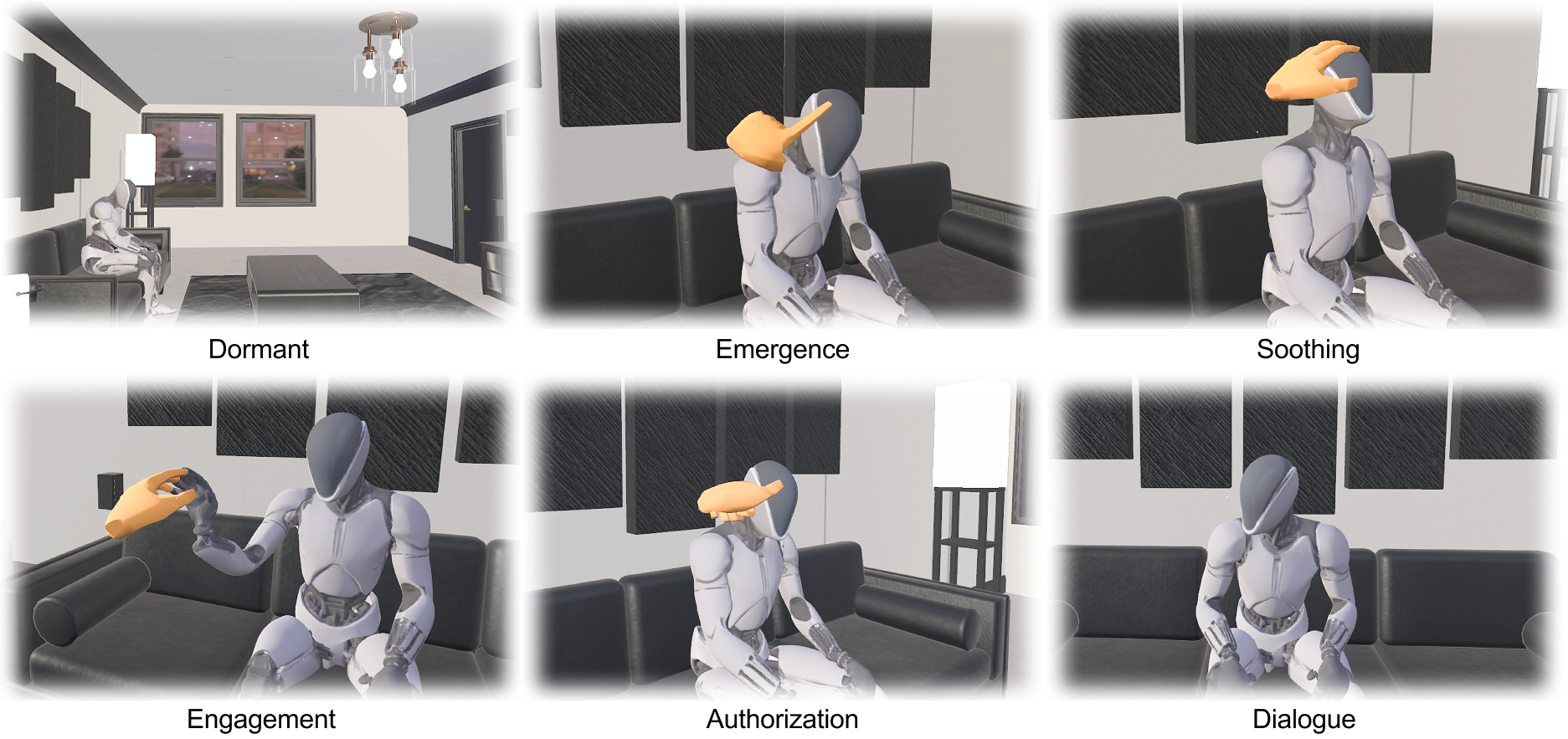
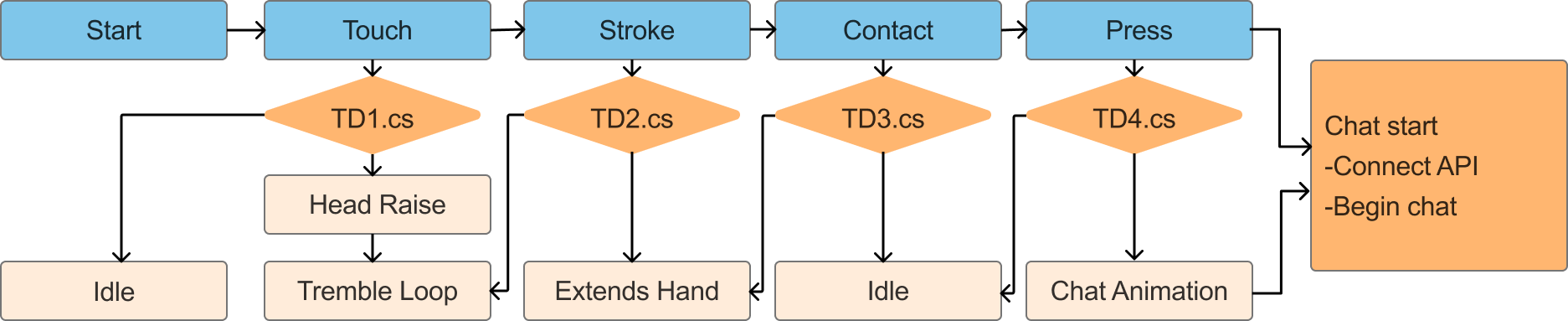
A Pico 2 and Unity3D environment creates a social meeting with a virtual robot. The same physical pulse can be delivered to different fingers and mapped to different contexts such as touch, stroke, contact and press.
Software HRI Interaction
Software Flow
Evaluation
The experiment separates physical stimulation from social interpretation: participants experienced consistent tactile signals, while the interaction context changed the meaning of those signals and influenced perceived trust.